Seasonal
Seasonal Riding Across Canadian Weather
Updated May 29, 2026
Canadian weather asks a lot of a bicycle. The same machine has to handle spring grit, summer heat, autumn rain, and in many regions a long cold winter. A few seasonal adjustments keep it reliable year-round.

Spring: clean up after the thaw
Melting snow leaves sand, salt, and grit on paths and roads. After winter, give the bike a proper clean, then re-lubricate the chain. Salt residue accelerates corrosion, so wipe down the frame and drivetrain and check brake pads for embedded grit that can score rims or rotors.
- Degrease and re-lube the chain after the first wet rides.
- Inspect cables and housing for stiffness or rust.
- Re-check tire pressure; cold storage lowers it.
Summer: heat, hydration, and pressure
Warm air raises tire pressure slightly, so re-check after a bike has sat in the sun. Long summer rides demand more water than riders expect; plan refills, especially on exposed trail. Sun protection and an earlier start help on the hottest days.
Local detail: long daylight, big regions
Summer daylight is long across much of Canada, which opens up bigger rides, but distances between services on rural trail can be substantial. Carry more water and food than a city ride would need.
Autumn: wet leaves and shorter days
Fallen leaves hide roots and become slippery when wet, much like painted lines and metal surfaces. Brake earlier and lean less in corners. Daylight shrinks quickly, so fit lights and confirm they are charged; many provinces require a front light and rear reflector or light after dark.
Winter: cold, traction, and corrosion
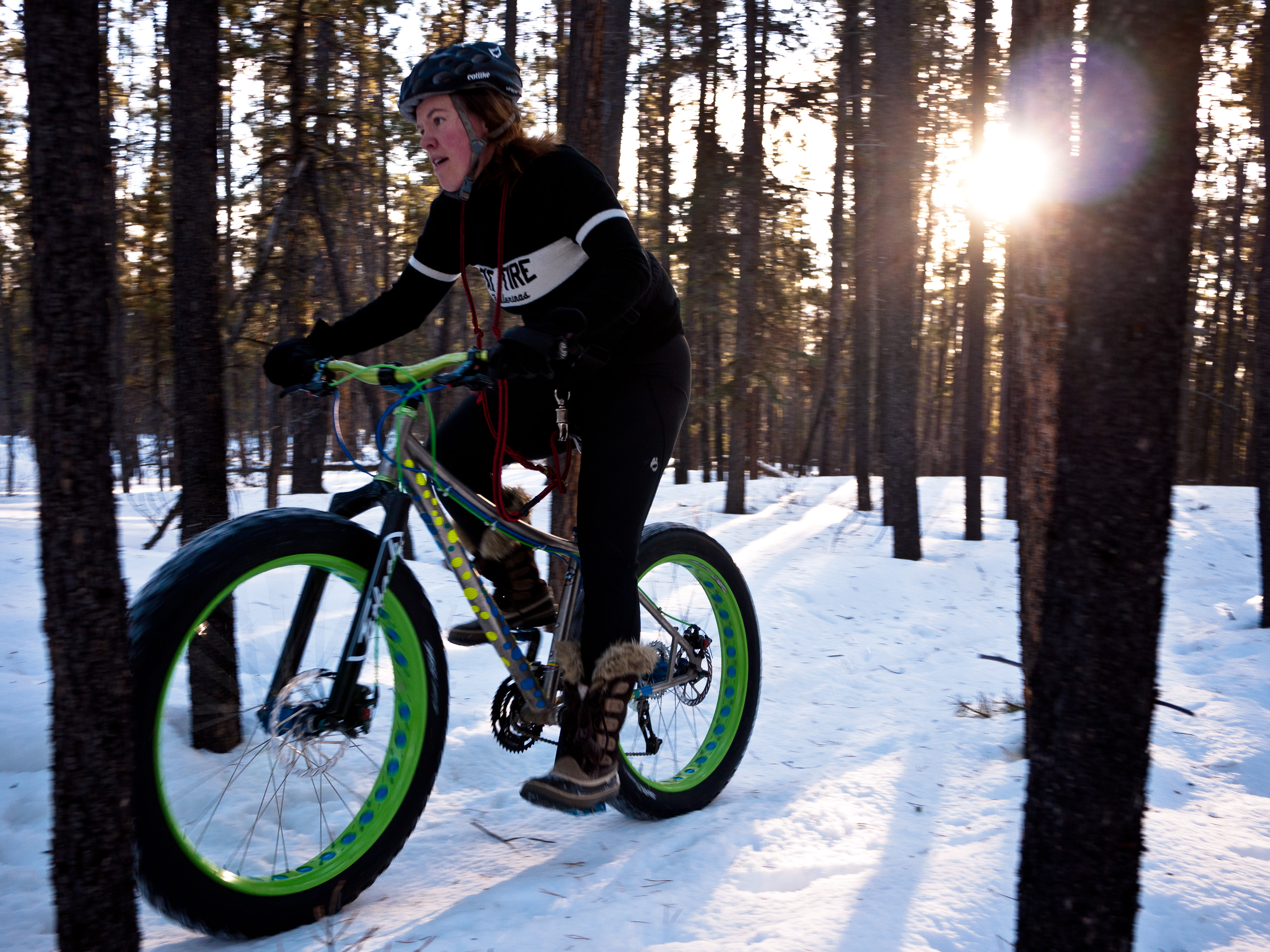
Winter riding is feasible in much of Canada with the right setup, and a dedicated discipline of "fat biking" uses oversized low-pressure tires for snow.
- Traction: lower tire pressure and, where conditions warrant, studded tires improve grip on ice and packed snow.
- Drivetrain: road salt is corrosive; use a wet-weather lubricant and clean the bike more often.
- Visibility: short days and low sun make lights and reflective gear essential.
- Comfort: protect hands and feet first; they cool fastest when stationary at lights.
Related reading
Seasonal traction depends heavily on tires; see Tire Care: Pressure, Wear, and Roadside Fixes. Plan around weather windows with Planning a Cycling Route on Canadian Trails.
References
- Government of Canada — weather and road safety resources.
- Environment and Climate Change Canada — forecasts and seasonal conditions.
- Trans Canada Trail — seasonal trail access notes.